
CCAT 1st Grade Test.
Tackling the CCAT Grade 1 Without the Tears: A Kitchen-Table Guide for Canadian Families
If you are a parent sitting at your kitchen table in Victoria, Vancouver, Toronto, or anywhere else across Canada, wondering how on earth your six- or seven-year-old is supposed to sit down and take the Canadian Cognitive Abilities Test (CCAT) Grade 1 Test, take a deep breath. You are not alone.
Most school districts from British Columbia to Ontario use the CCAT (specifically CCAT Level 7, since it’s designed for children who are typically seven years old) as the initial gateway for gifted, enriched, and talented program placements. But here is what the school board information sheets rarely tell you: the test doesn’t check what your child has memorized from their school reader. It looks at raw learning aptitude across three areas—verbal, quantitative, and nonverbal reasoning.
And after years spent in the classroom and right here at my own desk publishing practice materials, I can promise you one thing: forcing a six-year-old to stare at a massive, sterile corporate workbook does way more harm than good. Big Prep companies love to sell heavy, generic national templates filled with intimidating questions. We do things differently.
CCAT 1st Grade Test sections
| The CCAT Grade 1 Test: Quick 5W Overview for Canadian Parents | |
|---|---|
| Who | Six- and seven-year-old students (typically in Grade 1, taking CCAT Level 7) across Canadian school districts from BC to Ontario applying for gifted, enriched, and talented programs. |
| What | The Canadian Cognitive Abilities Test (CCAT)—a reasoning assessment measuring learning aptitude through Verbal, Quantitative, and Non-Verbal pictorial and geometric question batteries. |
| Where | Administered right in the child’s local school setting by teachers or proctors, supported by our independent online course and practice materials published right here in Victoria, BC. |
| When | Usually scheduled during the fall or winter terms of Grade 1. Best prepared for gradually using short, playful 2-minute breakfast bursts rather than exhausting, high-pressure cram sessions. |
| Why | To spot natural cognitive strengths and place children in specialized school programs—and why we built our plain-English course to bridge the reading barrier so kids are tested on logic, not decoding stress. |
Want to skip the corporate workbooks and try something kinder?
Grab our plain-English CCAT Grade 1 Online Course & Practice Pack ($79 CAD). Built by educators right here in BC to help your six-year-old build real confidence over breakfast.
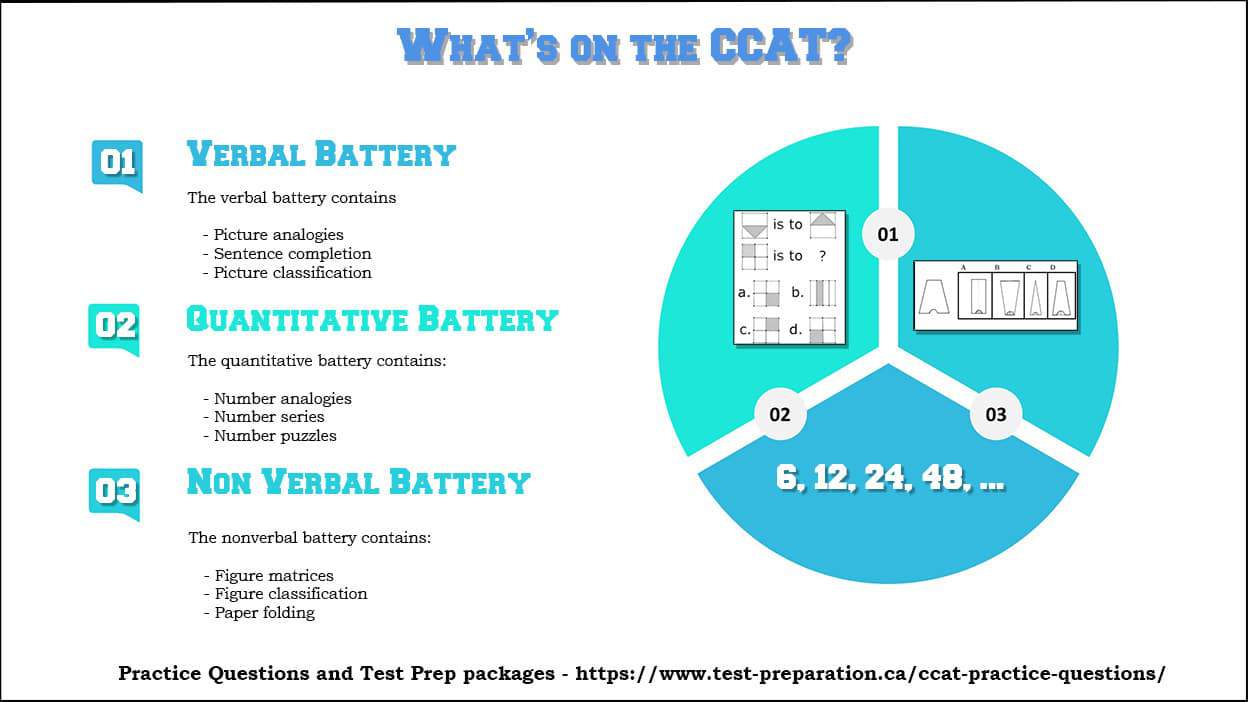
When we’re dealing with the CCAT Level 1, we are working with young kids—and after my years in the classroom, I can promise you that forcing a little one to stare at a massive, boring workbook does way more harm than good.
Instead of trying to tackle everything at once, we use quick, focused bursts. Brush the breakfast crumbs off the kitchen table, pull up a chair with your child, and let’s try a totally different approach.
The 120-Second Mini-Challenge
We always keep the clock in mind. The real test moves fast, so we need to get your child used to that pace early on without making them anxious.
Here is a quick taste of how we do it:
Start the two-minute video timer. You and your kiddo have exactly 120 seconds to look through the next three questions together.
If the timer beeps and you are only on question two, please don’t stress about it. The goal today isn’t a perfect score. We just want to find out where your child’s starting line is. Every student learns a little differently, and figuring out what they need is the first step in giving them a fair shot—which is exactly why our business dedicates a portion of every sale to supporting global education charities.
Take a breath, hit start, and let’s see how they do.
CCAT Challenge Timer
A quick note for parents: Because Grade 1 students are still figuring out how to read, the actual CCAT relies heavily on pictures and shapes rather than words. For this quick drill, you will need to act as the “test booklet.” Read the questions out loud to your child exactly as they are written below.
Question 1: Picture Analogies (Verbal Reasoning)
Parent Instructions: Point to your shoe, then point to your foot. Then hold up your hand.
Ask your child: “A shoe goes on a foot. Which of these things goes on a hand in the exact same way?”
A) A hat
B) A scarf
C) A mitten
D) A ring
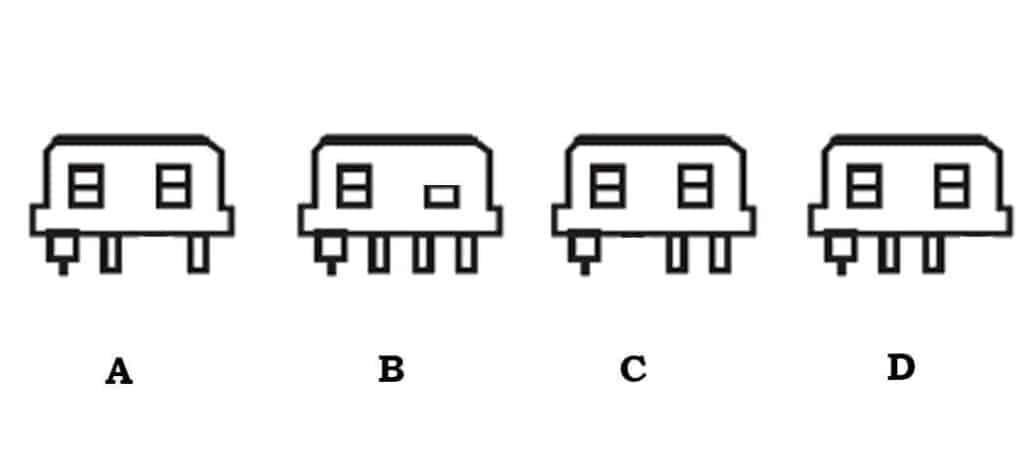
2.
3. When the two longest sides touch what will the shape be?
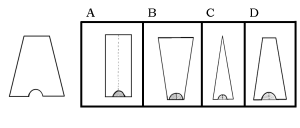
1 C (A mitten)
The "Why": This question tests relational thinking. Big Prep companies love to make this sound complicated, but it's just finding the matching relationship. If the child guessed "D) A ring," remind them of the exact rule: a shoe covers the whole foot to keep it warm, just like a mitten covers the whole hand.
2. B
Choice B has 3 prongs and a half rectangle in the upper portion.
3. D
The Anatomy of a Wrong Answer: Picture Analogies
Let’s look at a classic nonverbal picture analogy question that trips up bright first-graders:
The Prompt: An image of a bird next to a nest, followed by a dog next to a blank space.
The Options: A) A leash, B) A doghouse, C) A bone, D) A bowl.
The Trap Answer: Many children choose A (A leash) because dogs and leashes go together in daily life.
The Real Logic: The relationship is shelter/habitat (a bird lives in a nest; therefore, a dog lives in a doghouse).
Big Prep companies will grade this wrong and slap a low percentile score on your child’s report. At Complete Test Preparation Inc., we teach parents how to guide their children to spot the relationship rule rather than just picking items that look vaguely familiar.
Reverse Practice Check: Imagine a student who sees a picture of a mitten and a hand, and then a foot, and immediately selects “sock” because feet wear socks. That’s correct! But what if they selected “shoe laces” because shoes have laces? Where did the logic slip? They focused on a physical accessory part rather than the overarching category of protective garments. Pointing that out gently during practice changes everything.
| Tip & Strategy | Parent Advice | Student Voice |
|---|---|---|
| 1. Light & Playful Practice | Use logic puzzles and games instead of formal, high-pressure study sessions. | Prefers “brain games” and puzzle time over studying. |
| 2. Question Familiarity | Expose kids to format types early so test day holds no surprises. | Feels “less scared” knowing what to expect. |
| 3. Pacing & Stamina | Practice under timed conditions to build stamina and spot time-management hurdles. | Learns how to go faster and feels less rushed. |
| 4. Celebrate Effort | Praise hard work and resilience rather than focusing strictly on scores. | Responds better to praise for trying hard. |
| 5. Keep Perspective | Remind children that a single test doesn’t measure their worth or intelligence. | Relieved knowing it’s just a snapshot of how they think. |
| 6. Calming Techniques | Practice simple breathing exercises beforehand to manage mid-test nerves. | Uses slow breathing to calm down on tough questions. |
Test Day Is Coming Faster Than You Think
Watching your bright, curious first-grader come home feeling defeated by a test format they weren’t ready for is a heartbreak every parent wants to avoid. Don’t let a poorly paced morning close doors to enriched programs for years. Give them the gentle, clear guidance they deserve.
Get Instant Access Now — Protect Your Child’s Confidence
6-Month License • Instant PDF & Online Access • Supporting Children’s Literacy Charities
CCAT 7 Test Scores
Understanding Your Child’s CCAT Level 7 Score Report
When the results arrive, the score slip can look like an alphabet soup of psychometric jargon. Here is what those numbers actually mean for your family:
- Age Percentile Rank (APR): Compares your child’s score against other children of the exact same age (down to the month).
- Grade Percentile Rank (GPR): Ranks your child against other students in Grade 1 across the testing pool.
- Stanine (S) Score: A 1-to-9 scale summarizing learning aptitude, where 9 is the highest band. Don’t panic if a score fluctuates—six-year-olds have good days and distracted days!
Canadian Cognitive Abilities Test (CCAT) – Grade 1 FAQ
| Question | Answer |
|---|---|
| What is the CCAT Grade 1? | The CCAT measures verbal, non-verbal, and quantitative reasoning abilities in 6 and 7-year-olds to identify cognitive strengths and gifted potential. |
| What batteries are included? | It consists of three sections: Verbal Battery, Quantitative Battery, and Non-Verbal Battery. Grade 1 questions are predominantly pictorial and geometric. |
| How is the test administered? | It is typically administered in a school setting in multiple untimed or lightly-paced sessions, using audio prompts so reading ability does not hinder scores. |
| How can my child prepare? | Familiarize them with basic patterns, shapes, and sorting exercises, ensure a good night’s rest, and approach test day with a calm, positive mindset. |
Updated: Sunday, October 11th, 2026
Published: Monday, April 4th, 2022
Our Independent Publishing Standards – Built by Educators
Every practice question and 2-minute drill on this page is checked right here in Victoria, BC, against actual Canadian cognitive testing standards. For 20 years, Complete Test Preparation Inc. has skipped the generic, imported question banks to focus on what actually helps a nervous 1st graders preparing for the CCAT 7 build real confidence.
- Independent and Local: No corporate call centers or automated AI fluff—just straightforward guidance from educators who know where students stumble on verbal, non-verbal, and quantitative reasoning sections.
- Giving Back: A portion of every book and course sale goes directly to support educational charities and children’s literacy programs.
— Cheers, Brian Stocker MA., Complete Test Preparation Inc.