
CCAT 1st Grade Test.
Canadian parents in Canada with the dream of getting their 1st graders enrolled in their school’s gifted and talented program need to sit for the Canadian Cognitive Abilities Test (CCAT) 1st Grade Test. This test is the initial step most Canadian schools require students to take successfully before they earn admission to their special program. The CCAT 1st Grade Test measures a child’s learning aptitude by taking them through nonverbal, verbal, and quantitative questions. Many candidates find questions in this test a little more difficult than what they typically take in school, as the test does not test the memorized information.
At times the CCAT 1st Grade Test is referred to as the CCAT Level 7 since the test assesses candidates that are on average of 7 years old. Even though the test has a verbal battery, The CCAT 1st grade test is focuses on quantitative and nonverbal questions. A candidate’s performance in the CCAT Level 7 Test directly influences their chances of enrollment in a school’s special program.
CCAT 1st Grade Test sections
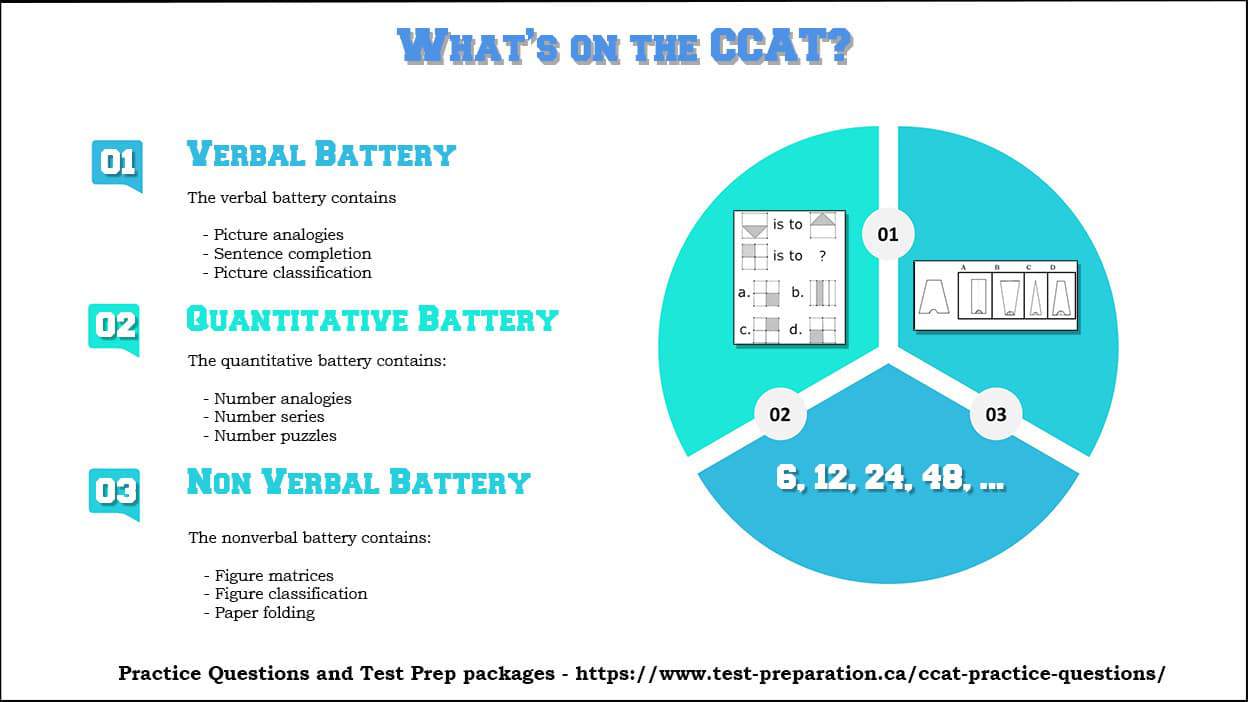
The CCAT 1st Grade Test consists of 136 questions divided into three batteries, verbal, quantitative, and nonverbal. Each battery is further subdivided into three subsections that give a detailed assessment of a candidate’s abilities within each section. Every school determines its own requirements for test administration. Some schools require candidates take all three sections in one sitting; while others let the candidates take every section separately. A teacher at your school usually administer the test and acts as the test proctor with the responsibility of guiding the candidates through the test.
When we’re dealing with the CCAT Level 1, we are working with young kids—and after my years in the classroom, I can promise you that forcing a little one to stare at a massive, boring workbook does way more harm than good.
Instead of trying to tackle everything at once, we use quick, focused bursts. Brush the breakfast crumbs off the kitchen table, pull up a chair with your child, and let’s try a totally different approach.
The 120-Second Mini-Challenge
We always keep the clock in mind. The real test moves fast, so we need to get your child used to that pace early on without making them anxious.
Here is a quick taste of how we do it:
Start the two-minute video timer. You and your kiddo have exactly 120 seconds to look through the next three questions together.
If the timer beeps and you are only on question two, please don’t stress about it. The goal today isn’t a perfect score. We just want to find out where your child’s starting line is. Every student learns a little differently, and figuring out what they need is the first step in giving them a fair shot—which is exactly why our business dedicates a portion of every sale to supporting global education charities.
Take a breath, hit start, and let’s see how they do.
CCAT Challenge Timer
A quick note for parents: Because Grade 1 students are still figuring out how to read, the actual CCAT relies heavily on pictures and shapes rather than words. For this quick drill, you will need to act as the “test booklet.” Read the questions out loud to your child exactly as they are written below.
Question 1: Picture Analogies (Verbal Reasoning)
Parent Instructions: Point to your shoe, then point to your foot. Then hold up your hand.
Ask your child: “A shoe goes on a foot. Which of these things goes on a hand in the exact same way?”
A) A hat
B) A scarf
C) A mitten
D) A ring
2.
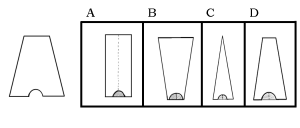
3. When the two longest sides touch what will the shape be?
1 C (A mitten)
The "Why": This question tests relational thinking. Big Prep companies love to make this sound complicated, but it's just finding the matching relationship. If the child guessed "D) A ring," remind them of the exact rule: a shoe covers the whole foot to keep it warm, just like a mitten covers the whole hand.
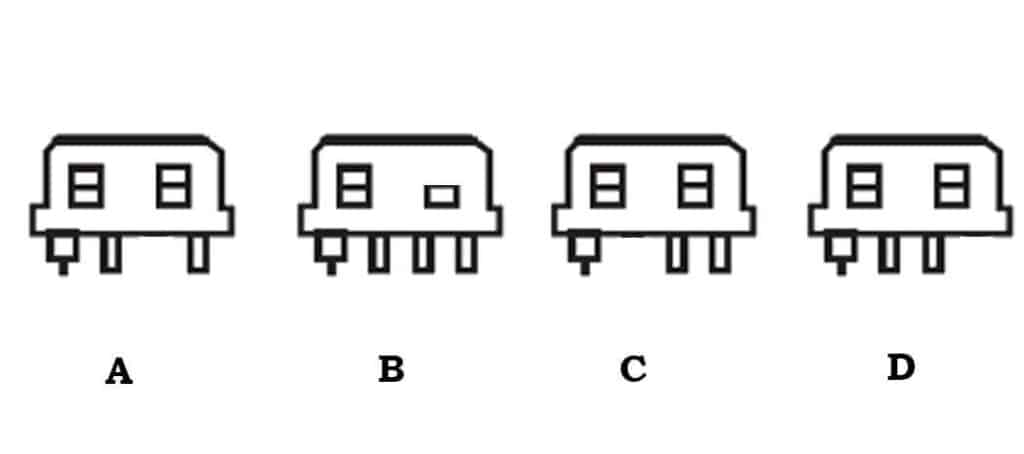
2. B
Choice B has 3 prongs and a half rectangle in the upper portion.
3. D
CCAT 7 Test Scores
CCAT 1st Grade Score Report.
The CCAT level 7 result slip will have three different scores that summarize the general cognitive ability of each student. Each score is the sum of results from the quantitative, nonverbal, and verbal sections. Each report will have an Age Percentile Rank (APR) score that ranks all candidates in a specific age group, a Grade Percentile Rank (GPR) that compares students according to other candidates on their grades, and a Stanine (S) score. A stanine score shows every student’s learning aptitude and is set between 1 and 9 with 9 being the highest possible score and 1 being the lowest.
Written by, Brian Stocker MA.,
Published by, Complete Test Preparation Inc.
Updated: Sunday, May 31st, 2026
Published: Monday, April 4th, 2022