
The NAV Canada Success Roadmap: Your 2026 Guide to the Cabin
You’ve hit “Submit” on your application. Now, the real work begins. NAV Canada isn’t looking for pilots or math geniuses; they’re looking for a specific type of “puzzle-solver” brain.
The road to Cornwall is long, and most folks get lost because they don’t know what’s coming around the bend. Here is your 30-second breakdown of the gauntlet:
Stage 1: The Digital Gatekeeper (NCAT)
- What it is: A series of online games and logic puzzles you take at your own kitchen table.
- The Goal: To see if you can spot patterns and stay calm when the “Ball on the Wall” starts moving faster.
- The Catch: This is where the biggest “cull” happens. If you don’t pass this, the journey ends before you ever see a simulator.
Stage 2: The In-Person Gauntlet (FEAST)
- What it is: You’ll head to a regional Area Control Centre (like Vancouver or Edmonton) for a full day of high-intensity testing.
- The Goal: Testing your “air traffic” instincts—spatial awareness, multitasking, and English listening skills.
- The Catch: It’s exhausting. It’s not just about being smart; it’s about endurance.
Stage 3: The Human Element (Assessment Centre)
- What it is: Group exercises and a formal interview with the folks who might one day be your colleagues.
- The Goal: Can you work in a team when things get hairy?
- The Catch: This is where personality matters as much as your test scores.
Aiming for Bilingual Position? You may have to prove your competency – See our English Second Language Evaluation SLE Course
Brian’s Reality Check:
I’ve seen a lot of bright students fail simply because they were surprised by the format of the NCAT. We don’t do “surprises” here.
Our goal is to make sure that when you see that first pattern on the screen, your heart rate doesn’t even budge.
| Stage 1: NCAT Assessment | Stage 2: FEAST Testing |
|---|---|
|
The Online Gatekeeper |
The In-Person Gauntlet |
Stage 1: The Digital Gatekeeper (The NCAT Breakdown)
This is the part of the journey where most candidates hit a snag. After you apply, you’ll get an invite for the NCAT (NAV Canada Assessment Test). It’s an online screening designed to see if your brain can juggle several balls at once without dropping any.
I’ve spent years looking at these types of tests, and I’ll tell you a secret the “Big Prep” guys won’t: This isn’t an IQ test. It doesn’t care how many fancy degrees you have. It’s a series of puzzles designed to see how you process information when the pressure is dialed up. You’re doing this at your kitchen table, but NAV Canada is looking for the version of you that can stay cool when the “virtual” skies get busy.
The Three Pillars of the NCAT
To get through Stage 1, you have to master three specific types of “games”:
- Inductive Reasoning: Think of this as the “What’s Next?” game. You’ll see a series of shifting shapes and patterns. Your job is to find the hidden rule and predict the next image in the sequence. It’s all about spotting logic in the chaos.
- Deductive Reasoning (The gapChallenge): This one is a bit of a brain-bender. It’s a grid-based puzzle (often involving shapes or symbols) where you have to fill in the missing pieces based on a strict set of rules. It tests your ability to take a general rule and apply it to a specific problem without making a leap in logic.
- Spatial Orientation: This is the most “ATC” of the bunch. You’ll be shown a radio compass and a plane’s position, and you have to instantly visualize where that plane is heading. It’s about taking 2D information and turning it into a 3D map in your head.
Brian’s Classroom Note:
I’ve sat with plenty of students in my time, and the biggest mistake folks make here is overthinking. They try to find a “secret formula” for every question.
In the NCAT, speed and accuracy are a balancing act. If you spend five minutes on one logic puzzle, you’ve already lost. We focus on teaching you the patterns so you can recognize the “trick” in five seconds, not fifty. It’s about building that “muscle memory” for your brain.
The NCAT 2-Minute Challenge: Logic Under Pressure
This isn’t just a game; it’s a micro-simulation of the high-stress environment Air Traffic Controllers navigate every day. The real NCAT (NAV Canada Assessment Test) features a critical “Ability to Concentrate” section that lasts exactly two minutes.
Successful candidates don’t just have high IQs; they have the cognitive stamina to remain highly concentrated while reacting quickly and accurately to rapidly shifting information.
We’ve designed this 2-Minute Challenge to mirror that exact intensity. This drill will focus on one of the foundational pillars of the NCAT: Inductive Reasoning (Rule Finding).
- Brian’s Reality Check: You are not expected to answer every single question. In the real assessment, 80% accuracy is often better than rushing to finish with 50% accuracy. This challenge is about finding your baseline pace where you are fast, but not reckless.
How the Challenge Works
In this 2-Minute Challenge, you will face 10 high-speed logic puzzles.
- Spot the Rule: You will be presented with a sequence of complex shapes or grids. There is a hidden logic—a mathematical pattern or rule—governing how the symbols shift.
- Predict the Outcome: Based on the rule you identified, you must select the next correct logical step from a list of options.
- Race the Clock: The moment you click ‘Start’, the 120-second timer begins. The puzzles will get progressively more complex as the time ticks down.
Instructions for a Safe Approach
Do not hit ‘Start’ until you are ready.
- Minimize Distractions: Ensure you are in a quiet environment. Put your phone away. The real NCAT requires absolute focus; this drill is practice for that discipline.
- Accuracy First: Do not double-guess. Trust your initial instinct. If a puzzle stumps you for more than 15 seconds, make your best educated guess and move to the next. Stalling on one question is the quickest way to fail this section.
- Review the Anatomy: When the time expires, we will not just give you a score. You will see a detailed breakdown (the “Anatomy of a Wrong Answer”) of why certain patterns are tricky, helping you correct your approach for your next practice run.
Directions: Questions 1 – 8: The first 3 figures are related. Choose the
figure that has the same relationship.
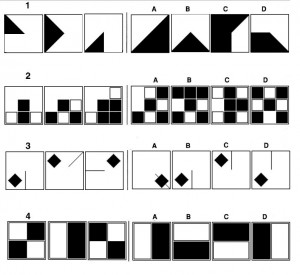
Directions: In each of the following questions, select the choice that does not belong with the other three.
5.
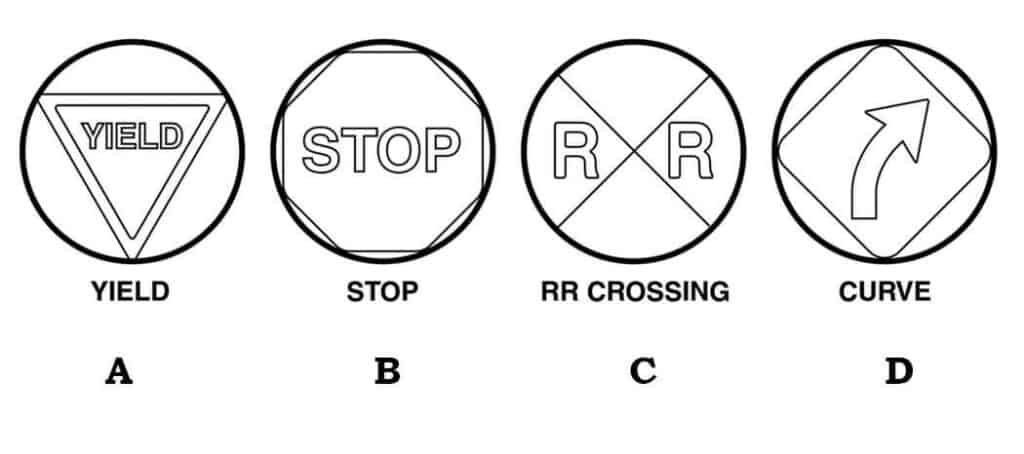
6.
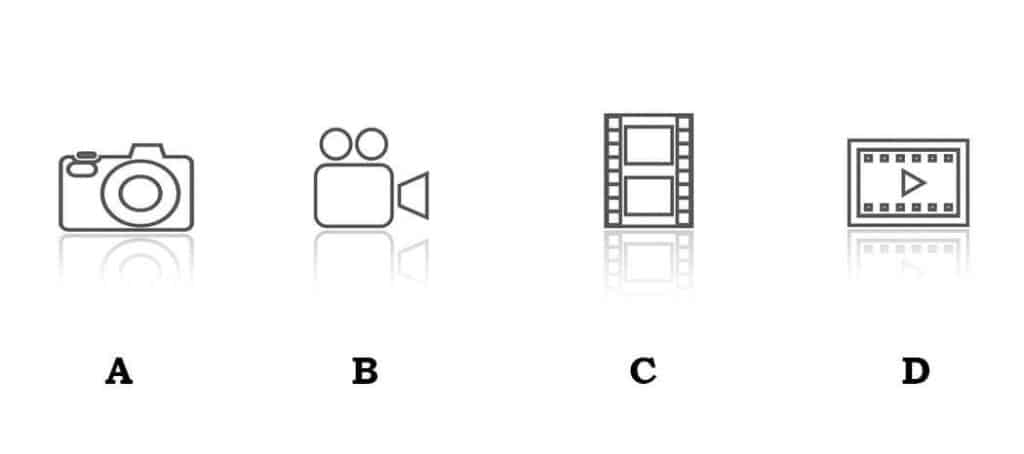
Task: These questions simulate monitoring aircraft heading. You must mentally rotate the compass heading provided to determine the aircraft’s current flight direction relative to a fixed beacon.
7.
Beacon Location: The non-directional beacon is directly North (0°) of your current station.
Gyrocompass Heading: You are flying on a heading of 180° (South).
You must determine where the beacon is relative to your nose:
A) Directly ahead
B) Directly behind
C) Directly to your left
D) Directly to your right
8.
Beacon Location: The non-directional beacon is directly West (270°) of your current station.
Gyrocompass Heading: You are flying on a heading of 090° (East).
Where is the beacon relative to your nose?
A) Directly ahead
B) Directly behind
C) Directly to your left
D) Directly to your right
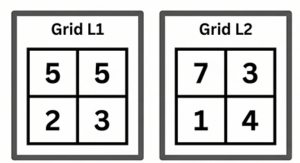
9 (Deductive Reasoning Challenge)
Condition: You are given a 4×4 matrix. Each shape (X, Y, Z, W) can only appear once per row/column.
Row 3 is missing its shape at column 2. You already have shape X at Row 1, Col 2, and Row 2, Col 2.
Which shape MUST be Row 3, Col 2?
A) Shape X
B) Shape Y
C) Shape Z
D) Cannot be determined
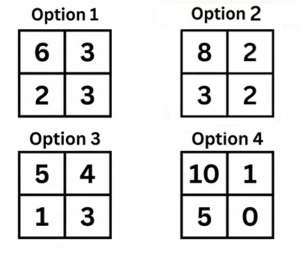
10. Which grid from the options follows this same logic?
How much do air traffic controllers make
Air traffic controllers earn a competitive salary, which varies based on location, experience, and the complexity of flight paths.
The average salary $142,649 per year. The salary ranges from a low of $49,000 to a high of $284,000.
Working conditions for air traffic controllers is indoors in control towers or facilities. These environments can often be noisy due to the constant communication and monitoring of aircraft movements. Despite the noise, controllers are trained to remain focused and alert at all times to ensure the safety of air travel.
In terms of work schedules, air traffic controllers may work on a rotating basis, including morning, night, and weekend shifts. This is necessary to provide continuous air traffic control services throughout the day. While the schedule may vary, controllers are given regular breaks to ensure they remain mentally sharp during their shifts.
| Stage 1: NCAT Assessment | Stage 2: FEAST Testing |
|---|---|
|
The Online Gatekeeper |
The In-Person Gauntlet |
FEAST Assessments
The First European Air Traffic Controller Selection Test (FEAST) is a comprehensive assessment tool used by NAV Canada and other Air Navigation Service Providers (ANSPs) in their hiring process.
FEAST I This module focuses on measuring fundamental cognitive skills and abilities required for air traffic controllers. It includes tests assessing decision-making, logical reasoning, visual perception, attention, multi-tasking, and spatial orientation. FEAST I includes an English language proficiency test.
FEAST II After FEAST I, you are ready for the next module, FEAST II, which has two ATC work sample tests:
- FEAST Dynamic ATC Radar test (FEAST DART) This will assesses your multi-tasking abilities with various tasks that simulate real-world air traffic control scenarios using radar systems.
- FEAST Multipass test This evaluates your multi-tasking skills further, giving you multiple tasks simultaneously, similar to the demands of air traffic control.
FEAST III The third module involves a personality questionnaire that assesses candidates’ personality traits and behavioral tendencies. Different organizations may have variations in the content and approach of this phase, but it aims to gain insights into candidates’ suitability for the role based on their personality attributes.
Built by Teachers, Not Algorithms
Every practice question and drill on this page is checked right here at our kitchen table in Victoria, BC, against actual Canadian testing standards. For 20 years, Complete Test Preparation Inc. has skipped the generic, imported question banks to focus on what actually helps a stressed applicant build real confidence before exam day.
- Independent & Local: No corporate call centres, no automated AI fluff—just straightforward guidance from educators who know exactly where students stumble on pulleys, gears, and levers.
- Giving Back: A portion of every book and course sale goes directly to support global educational charities and children’s literacy programs.
— Cheers, Brian Stocker, M.A. (Complete Test Preparation Inc.)
Updated: Friday, October 2nd, 2026
Published: Friday, May 26th, 2023