
About the CCAT Grade 5 Test – Level 11
5th-grade students in Canada are required to sit for an approved aptitude test before they are enrolled in a gifted and talented program. The Canadian Cognitive Abilities 5th Grade Test is the most common for 5th graders take. The test is commonly referred to as CCAT Level 11, as candidates for the test are expected to be about 11 years of age.
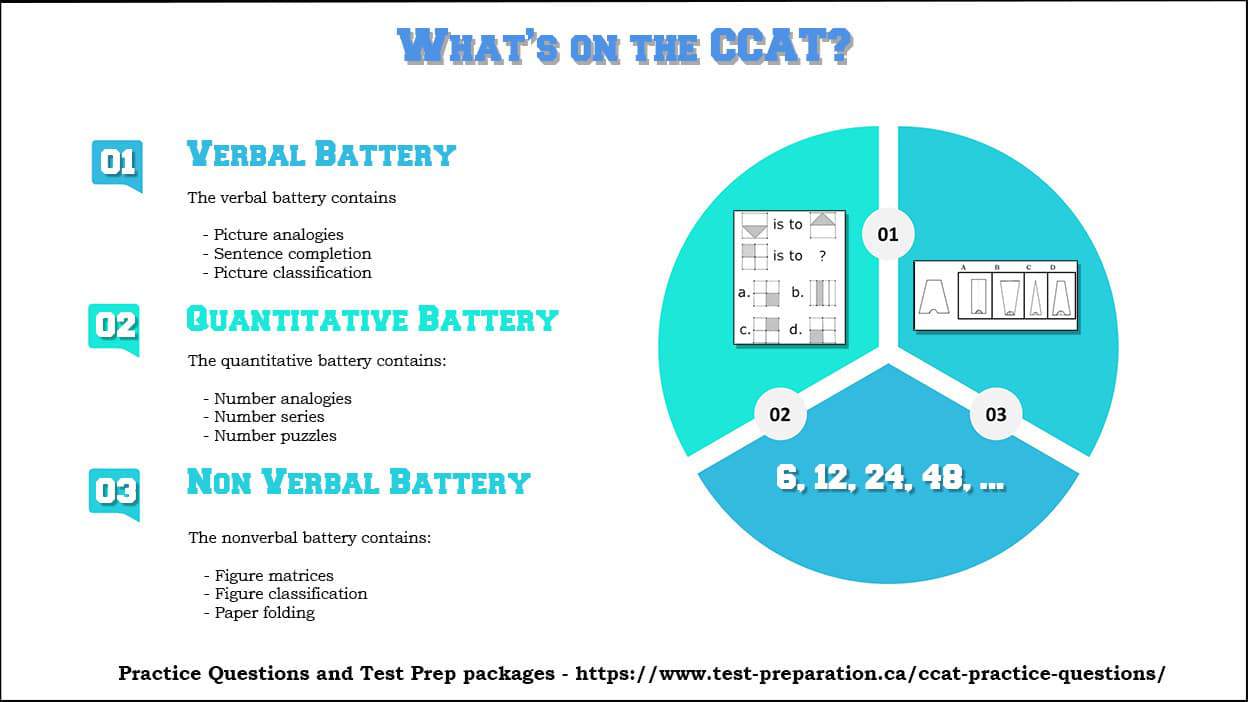
The CCAT 5th Grade test assesses student’s cognitive abilities using three categories of assessments, or batteries. These are, the verbal, nonverbal, and quantitative battery. The test is structured to be fair to all as candidates with underdeveloped English skills can still score well on the test. The CCAT Level 11 test results are used as part of the admission criteria to special school programs such as the gifted and talented program.
PDF Download
Online Course
Amazon Paperback
*A portion of every sale goes directly to educational charities helping students in need.
What’s on the Test
Candidates for the CCAT Level 11 test will be required to answer 176 questions, as in the CCAT 4th Grade Test. Since 5th-grade students have developed better cognitive abilities, the questions in each section will be harder than the other test levels. Depending on the school’s requirements, the three sections may be administered in one sitting, or taken separately.
Roll Up Your Sleeves: Active CCAT 5 Practice
We can talk about test theory until the rain stops here on the coast, but simply reading about an exam won’t help your kid actually pass it. To tackle the CCAT 5, they need to get the reps in.
After years in the classroom, I’ve learned that active practice is the absolute best way to build a student’s confidence. So, let’s push the textbook advice aside for a minute. Clear off a spot at the kitchen table, grab a pencil, and call your student over to the screen to try out one of our favorite methods.
The 120-Second CCAT Sprint
The clock is usually a student’s biggest enemy on the CCAT. That’s exactly why we rely so heavily on our 2-Minute Power Drills in the full course. To give you a feel for how it works, we’ve put together a quick, bite-sized sampler.
- The Game Plan: Hit play on the video timer below. You have exactly two minutes to tackle the next three questions.
If the buzzer goes off before you’re done, don’t sweat it. The only goal today is to figure out your starting point so we know what to work on next.
Take a deep breath. Ready? Let’s go.
CCAT Challenge Timer
The 2-Minute CCAT 5 Challenge
1. Verbal Analogy
Whisper : Shout :: Breeze : _____
A) Window
B) Summer
C) Gale
D) Cloud
2. Number Series
What number comes next?
3, 5, 9, 17, ___
A) 25
B) 33
C) 34
D) 26
3. Equation Puzzle
(24 ÷ 4) x (9 – 4) = ___
A) 24
B) 30
C) 36
D) 42
1. Correct Answer: C (Gale)
The "Why": This is a "degree of intensity" analogy. A shout is a much louder, more intense version of a whisper. Therefore, we need to find the word that represents a much stronger, more intense version of a breeze. A gale is a very strong wind.
2. Correct Answer: B (33)
The "Why": In this series, the gap between the numbers doubles each time.
From 3 to 5, you add 2.
From 5 to 9, you add 4.
From 9 to 17, you add 8.
To find the next number, you need to add 16 (which is double 8) to 17. 17 + 16 = 33.
3. Correct Answer: B (30)
The "Why": This tests basic order of operations. You always solve the math inside the brackets first.
First bracket: (24 ÷ 4) = 6.
Second bracket: (9 - 4) = 5.
Finally, multiply those two answers together: 6 x 5 = 30.
Have your 6th grader try these out with a timer. If they stumble on one, that's perfectly fine—that's exactly where the real learning happens. It’s all about getting the reps in.
Reverse Practice: Spot the Flaw (CCAT 5)
Sometimes the absolute best way to find the right answer is to study the wrong one.
When we’re designing these workbooks around the kitchen table here in Victoria, we spend a lot of time looking at the common traps students fall into. The “Big Prep” companies love to just hand kids a list of tricks to memorize. We do things differently. We want your 5th grader to actually understand the engine under the hood.
We call this “Reverse Practice,” or as I like to tell the kids, playing detective. In this drill, I’m going to give you a real CCAT 5 question, and I’ll show you how a hypothetical student answered it incorrectly. Your child’s job is to tell me exactly why that student’s logic went off the rails.
Call your student over, grab a scrap of paper, and let’s find the flaws.
Exercise 1: The Number Series Trap
The Question: What number comes next in this pattern?
2, 5, 9, 14, ___
The Flawed Answer:
“The answer is 18, because 14 plus 4 is 18.”
Spot the Flaw:
Pause here. Ask your child: Why is this thinking incorrect? What did the student miss?
The Breakdown (Read this after they guess):
The student stopped looking at the whole pattern and just made a quick guess. If we look closely, the gap between the numbers is growing each time.
2 to 5 is a jump of +3
5 to 9 is a jump of +4
9 to 14 is a jump of +5
The student just added 4 again at the end. But the pattern demands we take the next logical step, which is +6. So, 14 + 6 = 20. We call this the “lazy brain” trap. You have to trace the pattern all the way to the end!
Exercise 2: The Analogy Illusion
The Question:
Helmet : Bicycle :: Seatbelt : _____
A) Car
B) Safety
C) Accident
D) Fasten
The Flawed Answer:
“The answer is B (Safety) because a seatbelt is used for safety, just like a helmet is used for safety.”
Spot the Flaw:
Pause again. Ask your child: This sounds like it makes sense, but it’s a trap. Where did this student go wrong?
The Breakdown:
The student focused on what the items do instead of the actual relationship between the words. Yes, both items keep you safe, but the CCAT isn’t asking for a definition; it’s asking for a matched pair.
A helmet is the safety device used specifically on a bicycle. Therefore, a seatbelt is the safety device used specifically in a car. The correct answer is A. The test makers will always throw in a word that is related (like Safety or Accident) to distract you from the true relationship.
Doing just five minutes of this kind of “Anatomy of a Wrong Answer” practice does wonders for a student’s critical thinking. It teaches them to slow down and double-check their logic before they bubble in a sheet.
The Quick-Start: PDF
- Instant access: No waiting for the mail carrier. Start prepping for the CCAT 5 right now.
- Searchable: Use Ctrl+F to find specific logic rules in a heartbeat.
- Print what you need: Save your ink by only printing the Canadian Cognitive Abilities Test sections you struggle with.
- Budget-friendly: No shipping or printing costs—we pass those savings straight to you.
The Gold Standard: Course
- ★ EXCLUSIVE: A.I. Study Hall Tutor. A helping hand that never sleeps. It nudges you toward the right CCAT 5 answer without just giving it away.
- ★ EXCLUSIVE: 3-Minute Power Drills. Build your test speed and confidence without the study burnout.
- Dynamic Tracking: Tells you exactly which Grade 5 skills are "green" (ready) and which are "red" (need work).
- Realistic Simulation: Mimics the pressure of the real exam so you don't freeze up on test day.
The Classic: Paperback
- Zero distractions: No social media pop-ups. Just your student and the CCAT 5 material.
- Tactile learning: Good old pencil to paper. It's active studying that actually sticks.
- No blue light: Give your eyes a break from screen fatigue.
- The security blanket: A physical milestone of your progress that lives right on the kitchen table.
CCAT Grade 5 Score Report
The CCAT level 11 result slip has three different scores that tell the general cognitive ability of each student. Each score is reached by summing up results from the quantitative, nonverbal, and verbal sections.
The Age Percentile Rank (APR) score ranks all candidates by age group. The Grade Percentile Rank (GPR) ranks students by grade. The Stanine (S) score shows every student’s learning aptitude on a score between 1 and 9 with 9 being the highest possible score, 5 being average, and 1 being the lowest.
CCAT Test Tips
1. Practice by balancing between simulated practice exams and real-life examples. Even though practice tests are the most appropriate tool for studying, working with real-life examples is an important learning process. For example, while organizing your laundry, ask your child to categorize the clothes depending on their color. This will familiarize them with real-life patterns they may face in the actual test.
2. Ask your child to think out loud during the practice sessions to understand what is going on in your child’s mind. Encourage your child to explain their thinking, so that you can understand and guide them.
Since candidates might find the CCAT Level 11 test intimidating, they are advised to start their preparations a few weeks before the scheduled test day. Allowing a child to have enough time to go through and familiarize themselves with the material will increase their chances of doing well in the test. Try to practice with your child regularly for a few hours as they have to learn gradually without feeling pressured or stressed. A general rule of thumb is to avoid waiting until the last minute to rush your child through the material.
Click here for CCAT Grade 5 practice questions and complete test package
Written by, Brian Stocker MA.,
Published by, Complete Test Preparation Inc.
Updated: Monday, May 25th, 2026
Published: Wednesday, April 20th, 2022