
About the CCAT Grade 4 Test
If you’re reading this, you probably just pulled a letter out of your child’s backpack about the upcoming Grade 4 Universal Screening process, and mild panic has set in.
You aren’t alone. Every year, we hear from parents across the country who are terrified their bright 9-year-old will miss out on a great educational program simply because they’ve never seen a standardized bubble-sheet test before. They worry that the confusing formatting will mask their child’s true potential.
That’s exactly why we built these CCAT Grade 4 Level 10 Practice Tests | Canada.
We don’t believe in overwhelming kids with 5-hour marathon study sessions or mysterious corporate prep guides. Our goal is familiarity over frustration. We want to give your child the exact tools they need to sit at their desk and show what they know, without the tears and anxiety. Whether you need a quick CCAT grade 4 level 10 practice test PDF to review tonight after dinner, or you want to download CCAT level 10 questions Canada to work through on the weekend, we’ve got you covered.
Skip the Big Prep fluff. Let’s get your child ready, and remember—a portion of every purchase goes directly to supporting global educational charities, so you’re helping other kids while you help your own.
PDF Download
Online Course
Amazon Paperback
Demystifying the Nelson Cognitive Abilities Test Format
When you first hear the phrase “Cognitive Abilities Test,” it sounds incredibly intimidating. Big Prep companies love this because fear sells. But let’s clear the air, grab a coffee, and break down what this assessment actually looks like in plain English.
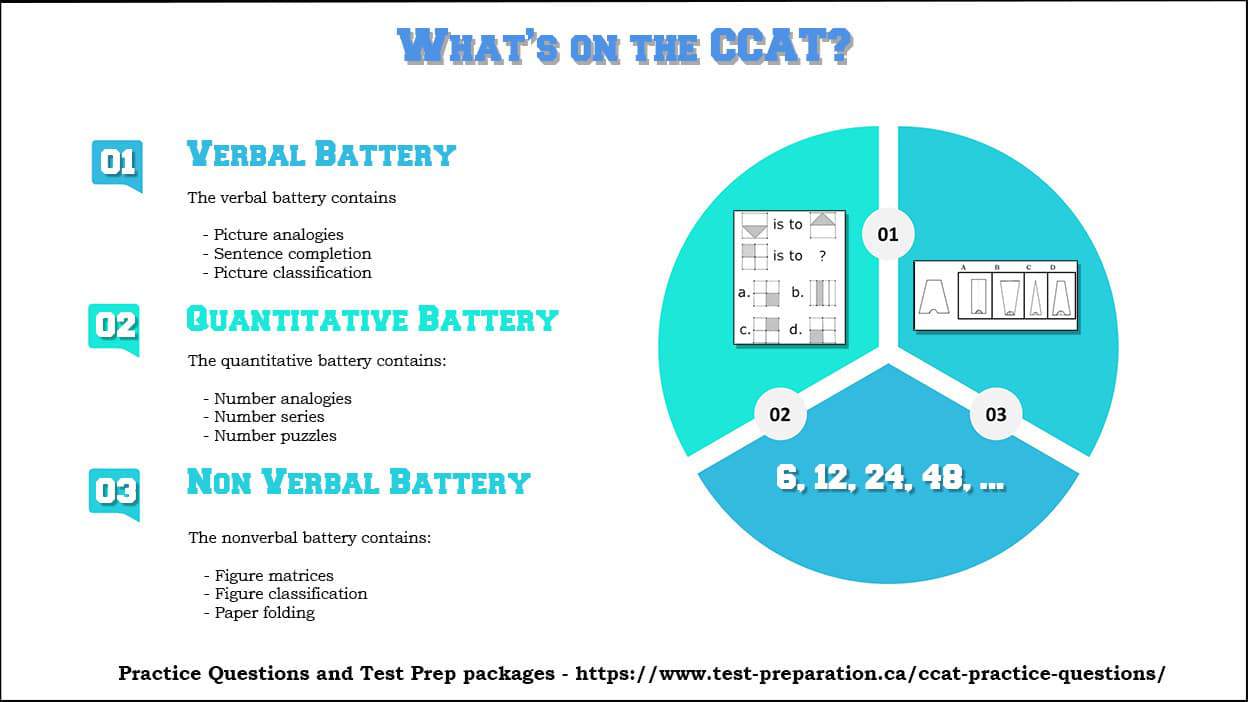
The CCAT isn’t testing whether your nine-year-old has memorized their multiplication tables or if they can spell complex words. It is a logic test, split into three main areas (the test makers call them “batteries,” but we just call them sections):
- The Verbal Section: This isn’t a spelling test. It asks your child to find the hidden relationships between words. If “shoes” go with “feet,” what goes with “gloves”? It measures how well they can organize everyday concepts in their head.
- The Quantitative (Math) Section: Forget standard math equations. This section is all about number patterns. They might see a list of numbers like 2, 4, 6, 8, and have to figure out the rule to find the next number. It tests their problem-solving, not just their memory.
- The Nonverbal (Visual) Section: This is the one that causes the most tears at the kitchen table. There are no words or numbers here—just shapes, patterns, and pictures of folded paper. It tests spatial reasoning. Since most Canadian Grade 4 classrooms don’t teach this regularly, bright kids often freeze simply because the questions look completely alien.
The Biggest Hidden Hurdle: The Bubble Sheet
On top of the tricky questions, your child will have to answer 176 questions under strict time limits, usually by filling in a separate multiple-choice bubble sheet. We see it every year—kids know the right answer, but they get anxious and bubble in the wrong row because they’ve never used a separate answer sheet before.
The Easy Fix
You don’t need to hire a pricey tutor to get past this. You just need to remove the surprise. Our $39 online course is the easiest way to replicate the real test environment right at home. We let your child practice the exact formatting and timing they’ll see on test day. Once they understand how the game is played, the anxiety drops, and they can just focus on showing what they know.
The 2-Minute Challenge
We can talk about test theory until the rain stops here on the coast, but simply reading about an exam won’t help your kid actually pass it. To tackle the CCAT 4, they need to get the reps in.
Active practice is the absolute best way to build confidence.
The 120-Second CCAT Sprint
The clock is usually the biggest enemy on the CCAT. That’s exactly why we rely so heavily on our 2-Minute Power Drills in the full course. To give you a feel for how it works, we’ve put together a quick, bite-sized sampler.
The Game Plan: Hit play on the video timer. You have exactly two minutes to tackle the next three questions.
The only goal today is to figure out your starting point so we know what to work on next.
Take a deep breath. Ready? Let’s go.
CCAT Challenge Timer
The “2-Minute CCAT Challenge”
Can you and your Grade 4 student solve these specific test questions in 120 seconds? Grab a timer and try this together at the kitchen table:
Verbal: Dog is to Puppy as Cat is to: (A) Feline (B) Tiger (C) Kitten (D) Meow
Quantitative: Look at this series: 3, 6, 9, 12… What comes next? (A) 13 (B) 14 (C) 15 (D) 18
Non-Verbal: If I fold a square piece of paper in half, punch a hole in the middle, and unfold it, how many holes will you see?
Reverse Practice
Instead of asking for the answer, let’s play detective.
The Broken Solution:
Here is a Math Pattern: 2, 4, 8, 16…
What comes next?
The Given Answer: “The next number is 24, because 16 + 8 = 24.”
Where did this go wrong?
The Explanation: The student assumed the rule was “add 8” because they only looked at the last step.
But if we check the beginning, 2 + 8 does not equal 4.
The real rule is “multiply by 2” (or double the number). So, 16 x 2 = 32.
The Quick-Start: PDF
- Instant access: Skip the mailbox wait. Start your CCAT 4 prep right now.
- Searchable: Use Ctrl+F to track down specific question types fast.
- Print what you need: Save your ink. Just print the tricky CCAT Grade 4 Level 10 sections.
- Budget-friendly: We pass the printing savings directly to your wallet.
The Gold Standard: Course
- ★ EXCLUSIVE: A.I. Study Hall Tutor. A patient helping hand that nudges your Grade 4 student in the right direction without just giving away the answer.
- ★ EXCLUSIVE: 3-Minute Power Drills. Build CCAT 4 speed without the kitchen-table burnout.
- Dynamic tracking: See exactly where they are green and good to go, or red and need more work.
- Realistic simulation: Mimics the real CCAT Grade 4 Level 10 pressure so there are no surprises.
The Classic: Paperback
- Zero distractions: No pop-ups or tabs. Just your child and their CCAT 4 prep.
- Tactile learning: Good old pencil to paper for active studying that actually sticks.
- No blue light: Give their eyes a well-deserved break from the screen.
- The reliable classic: A physical milestone you can keep right on the kitchen table.
CCAT Grade 4 Test Score
How to Read CCAT 4th Grade’s Test Score Report
The CCAT level 10 result slip has three scores that summarize the general cognitive ability of each student. Each score is reached at by summing the results of the quantitative, nonverbal, and verbal sections. Each report will have an Age Percentile Rank (APR) score that ranks all candidates in a specific age group, a Grade Percentile Rank (GPR) that compares students according to other candidates in their grade, and a Stanine (S) score.
A stanine score shows every student’s learning aptitude on a scale from 1 to 9, with 9 being the highest possible score, 5 being average, and 1 being the lowest. APR ranks 10-year-old candidates within their own age group.
CCAT 4th Grade Tips
Familiarize with the time limits.
Simulated CCAT Level 4 practice tests can be very useful familiarizing students with time limits. Many practice tests will have a timer to update you on how much time is left to finish the test. The actual test has time limits for every section. Practice ensures students are comfortable answering the questions at the required pace.
Make the study time fun.
At 10 years of age, most children prefer playing outside to sitting in a room studying. To effectively prepare for the test, let your child think of study time as a game and not a task. This will make your child anticipate the study sessions and not think of it as a task to complete before going out to play.
How to prepare for the CCAT Grade 4 Test
- Start preparations a month before the scheduled test day. Allowing a child to have enough time to go through and familiarize themselves with the material will increase their chances of doing well in the test. Try to practice with your child regularly for a few hours so they learn gradually without feeling pressured or stressed. Avoid waiting until the last minute to rush your child through the material.
- To familiarize your child with the concept of time, use a timer in your practice. Each section of the test has a time limit. Ensure that your child understands they cannot take all the time on one question or section. Having regular timed tests is very important if you are dealing with a slow test taker.
- Go through the explanation of each question in detail. Make sure students go through the answer explanations, even when they answer the questions correctly. Explanations can provide important insights into the questions and answers.
Written by, Brian Stocker MA.,
Published by, Complete Test Preparation Inc.
Updated: Wednesday, May 27th, 2026
Published: Thursday, April 14th, 2022