
Don’t Let the “Testing Limbo” Stall Your Career
You’ve done the ride-alongs. You’ve logged the hours at the gym. But right now, there is one thing standing between you and the station house: the Gledhill Shaw Firefighter Test.
In cities like Toronto, Ottawa, and Windsor, the GSI isn’t just a “formality.” It’s a gatekeeper. If you fail, you don’t just “try again next week.” You fall into the Testing Limbo—a 6 to 12-month mandatory wait period where your application gathers dust while others move up the seniority ladder.
We’ve spent years in the classroom and at the kitchen table checking our materials to ensure you Pass the Gledhill Shaw Firefighter Test the first time. Why gamble with a year of your life? Use our Gledhill Shaw practice test PDF and GSI firefighter exam online course to walk into that testing centre with the confidence of a veteran captain.
The hiring process for a municipal fire department in Canada is a marathon, not a sprint. If you’re looking at departments in Ontario or the Maritimes, you’re likely staring down the Gledhill Shaw (GSI) or CPS gateway.
Unlike “Big Prep” corporate guides that treat this like a generic HR exercise, we know the reality: one missed decimal point on a math question or a “red flag” on a situational judgement scenario can bench you for a year.
Here is the “kitchen table” breakdown of the Municipal Fire Department Hiring Process and how to navigate each hurdle.
| Gledhill Shaw Study Format | What’s Inside | Get Started |
|---|---|---|
|
Digital PDF Download Instant Access |
Our most popular "Straight-Talk" guide. Printable practice questions and full answer explanations. | Download PDF |
|
Interactive Online Course The Full Training Ground |
Includes timed 2-minute drills, video tutorials, and AI-assisted feedback to simulate the real GSI testing centre. | Go to Course |
|
Paperback Edition Amazon Canada |
For those who like to study with a pen in hand. A sturdy, 160-page workbook delivered to your door. | Order Paperback |
Take the 2-minute Gledhill Shaw Challenge!
Can you answer these 9 questions in 2 minutes
Part 1: Mechanical Reasoning
Think like a mechanic on the fire ground.
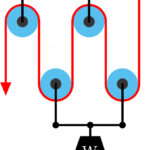
Pulleys: If you are using a block and tackle system with two moving pulleys to lift a 200lb equipment crate, how much force (ignoring friction) is required to lift it?
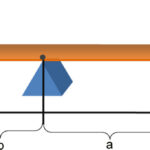
Levers: You are using a pry bar to open a jammed door. To get the most “mechanical advantage” (the most force for the least effort), should you place your hands closer to the door or further away at the end of the bar?
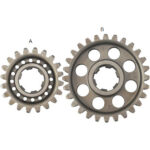
Gears: Gear A (10 teeth) is driving Gear B (40 teeth). If Gear A turns 4 times, how many times does Gear B turn?
Part 2: “Blue Collar” Math
Focus on decimals and flow rates.
Hose Pressure: A fire pump is delivering 450 liters per minute. If you increase the flow by 15%, what is the new flow rate?
The Decimal Drill: What is 0.75 times 0.6?
Basic Division: You have 180 feet of hose divided into 15-foot sections. How many sections do you have?
Part 3: Situational Judgment
The “Right Thing” vs. the “Fast Thing.”
Chain of Command: You notice a senior firefighter performing a safety check incorrectly. Do you:
A) Ignore it because they are senior.
B) Correct them loudly in front of the crew.
C) Mention it privately and respectfully immediately after.
Public Relations: While on a grocery run for the station, a citizen starts complaining loudly to you about “taxpayer money” being wasted on the truck. Do you:
A) Walk away and ignore them.
B) Politely explain the truck is in service and ready for calls.
C) Tell them to call the Mayor’s office.
Teamwork: A task needs to be finished before the end of the shift, but your partner is struggling. Do you:
A) Finish your part and head to the lounge.
B) Report their slow pace to the Captain.
C) Offer to help them finish so the team is ready for the next call.
1. 100 lbs (Two pulleys split the weight)
2. Further away (The longer the lever arm, the more force you generate)
3. 1 time (4:1 ratio)
4. 517.5 L/min (450 + 67.5)
5. 0.45
6. 12 sections
7. C (Safety first, but keep it professional)
8. B (You are always an ambassador for the department)
9. C (Firefighting is a team sport, period)
Mechanical Reasoning for Canadian Fire: Beyond the Wrench
There’s a myth floating around fire hall locker rooms from Victoria to Halifax: “If you can’t strip an engine and put it back together, you’ll fail the GSI mechanical section.” I’m here to tell you that’s “Big Prep” talk designed to make you panic. You don’t need to be a red-seal mechanic to pass this test. The Gledhill Shaw mechanical aptitude section isn’t testing your knowledge of specific spark plugs or transmission fluid levels—it’s testing your logic.
In the Canadian fire service, you need to understand how energy moves. Whether you are operating a ladder truck’s hydraulic systems or calculating the mechanical advantage of a Z-rig during a technical rescue, the principles are the same.
What you actually need to master:
- Force and Motion: If Gear A turns clockwise, which way does Gear D turn?
- Pulley Systems: How much effort is required to lift a 200kg load with a block-and-tackle setup? (Remember, we use the metric system in the Canadian fire service!)
- Fluid Physics: Understanding how pressure changes when a hose diameter narrows.
- Spatial Visualization: Looking at a 2D floor plan and “seeing” the 3D reality of the room layout.
The GSI “Kitchen Table” Memory Challenge
This isn’t a textbook exercise. This is a drill designed to simulate the split-second situational awareness you need in a busy fire hall. Don’t skim the details.
INSTRUCTIONS: The 2-Minute Lockdown
Start the Video and you will be shown an image for two minutes. Focus on relationships between objects, numbers, specific text, and the locations of personnel.
(Do not cheat and write anything down!)
After 2 minutes, the image disappears
Next another timer gives you 90 seconds to answer the questions below
Answer the 5 rapid-fire questions below. You have 90 seconds to complete the set.
The Questions
Do not scroll up to verify your answers yet.
Q1. PERSONNEL & PLACEMENT: How many total individuals (firefighters) are visible in the combined kitchen and dining area?
A. 2
B. 3
C. 4
D. 5
Q2. OBJECT IDENTIFICATION & QUANTITY: Look at the table. How many individual two-way radios (hand talkies) are sitting in the black charging base?
A. 1
B. 2
C. 3
D. 4
Q3. SPATIAL AWARENESS: Locate the firefighter seated at the table working on the tablet. To which shoulder is the condiment caddy (containing ketchup, mustard, and salt/pepper) closest?
A. His left shoulder
B. His right shoulder
C. Centered directly in front of him
D. It is not on the table.
How did you do? Here are the correct answers:
Q1: C (4 individuals). (One exiting the doorway on the left, two at the counter/sink, and one seated at the table.)
Q2: C (3 radios). (Always double-check. The base is black, but there are clearly three distinct units sitting in it.)
Q3: B (His right shoulder). (As he is facing the table, the caddy is clearly positioned to his right.)
Canadian Firefighter Physical Aptitude & Mental Readiness
If you’ve made it past the written GSI hurdles, the finish line is in sight—but this is where the “rubber meets the road.” In Canada, the physical side of recruitment isn’t just about being in shape; it’s about proving you can perform under extreme physiological stress without losing your cool.
The Physical Standard: CPAT vs. York
Depending on the municipality, you’ll likely face one of two “gold standards.”
- The CPAT (Candidate Physical Ability Test): This is a timed, 8-event circuit. You’ll be wearing a 50lb vest (simulating your turnouts and SCBA) as you navigate a stair climb, hose drag, equipment carry, and the dreaded “confined space” crawl.
- The York University Assessment: Common in many Ontario departments, this includes a treadmill test to measure your aerobic capacity ($VO_2$ max) and a series of job-related circuits like the “clamping” and “vehicle extrication” simulations.
Mental Readiness: The “GSI Mindset”
“Big Prep” companies will tell you to just “hit the gym.” I’m telling you to hit the books and the meditation mat, too. The Gledhill Shaw exam and the physical test both look for Mental Readiness—the ability to stay calm when your heart rate is at 170 BPM.
In the fire service, we call it “box breathing” or “tactical composure.” When you’re in that dark, cramped tunnel during the CPAT, or when you’re staring at a complex mechanical diagram in the GSI booklet, your brain wants to panic. We teach you how to:
- Lower the Noise: Filter out the crowd and the timers.
- Focus on the Next Five Metres: Don’t worry about the whole circuit; just worry about the task in your hands.
- The “Kitchen Table” Truth: Most candidates fail not because they aren’t strong enough, but because they let a small mistake on one station rattle them for the rest of the day.
| Still Unsure? Pick the Tool That Fits Your Study Style | ||
|---|---|---|
The Quick-Start PDFBest for: The student who needed to start ten minutes ago.
|
The “Gold Standard” CourseBest for: A full classroom experience at your kitchen table.
|
The Reliable PaperbackBest for: Deep, focused study without digital distractions.
|
| Don’t fall into “Testing Limbo.” Pick your version and walk into that testing centre with confidence. | ||
Gledhill Shaw CPS Practiced Vault
Basic Math
Listening Comprehension Practice
Mechanical Comprehension I
Situation Judgement Practice
Written by, Brian Stocker MA.,
Published by, Complete Test Preparation Inc.
Updated: Thursday, April 16th, 2026
Published: Tuesday, February 4th, 2025