
Stop Waiting for the Next Recruitment Cycle. Own Your Tier 1 Spot.
Most candidates treat the Elevator Industry Aptitude Test (EIAT) like a general knowledge quiz. They walk into the exam room thinking “basic math” means they can rely on a calculator—only to realize too late that the IUEC entrance exam prep they did wasn’t enough to handle the “no-calculator” rule or the complex mechanical physics required for a top-tier score.
In Canada and the US, simply “passing” with a 70% isn’t the goal. If you aren’t in Tier 1, you aren’t getting hired. At Complete Test Preparation, we’ve spent years at the kitchen table in Victoria refining our EIAT practice test Canada materials to ensure you don’t just pass—you dominate. Whether you are aiming for an elevator mechanic apprenticeship test in Toronto, Vancouver, or Chicago, our tools are hand-crafted to get you from the waiting list to the job site.
The State of the Industry: Your Ticket to a $125,000+ Career
In the Canadian trades, there’s “making a living,” and then there’s being an Elevator Constructor. While most trades offer a solid path, the elevator industry is consistently ranked at the top of the pay scale. We’re talking about a career where senior mechanics in hubs like Toronto, Burnaby, and Edmonton can see total compensation packages exceeding $125,000 per year, plus world-class health benefits and some of the most secure pensions in the country.
Why the “One-Shot” Rule is Real
The high pay comes with a catch: The Gatekeeper. The International Union of Elevator Constructors (IUEC) and the National Elevator Industry Educational Program (NEIEP) only open recruitment windows when the industry needs new blood—usually once every two years.
If you miss the window or, worse, if you fail the EIAT entrance test, you aren’t just looking at a few months of waiting. You are often barred from reapplying for a full 24-month cycle. In a competitive market like Ontario or BC, a recruitment intake can open and close within 48 hours because so many people are vying for a handful of spots.
The “Tier 1” Reality
Simply “passing” with a 70% isn’t enough in 2026. The hiring process is a ranking game.
- Tier 1 (Top Scores): You get the first call. You’re on the job site while others are still checking their emails.
- Tiers 3 & 4: You might stay on the “hiring list” until it expires in two years, never actually getting the call to start your apprenticeship.
We see it every year—bright, capable people from Victoria to Halifax who “wing it” on the math or mechanical sections and end up stuck in Tier 4. My mission is to make sure that doesn’t happen to you. We help you treat this like the high-stakes opportunity it is, ensuring you land in Tier 1 on your first try.
Secure Your Spot in Tier 1
Complete EIAT Study Guide + The Canadian Elevator Career Roadmap Included
| PREPARATION FORMAT | BEST FOR... | ACTION |
|---|---|---|
|
Interactive Online Course Video lessons, timed drills, & 24/7 access from any device. Personal A.I. Study Hall Tutor, 3-minute Power Drills, Interactive A.I. interview Coach |
MAX ENGAGEMENT | Start Training Now |
|
Digital Study Guide (PDF) Instant download. Perfect for tablets & self-paced study. |
INSTANT ACCESS | Download PDF |
|
Amazon Paperback High-quality print edition delivered to your door. |
PHYSICAL BOOK | Order on Amazon |
Join thousands of successful Canadian apprentices who used our hand-crafted materials to beat the "Big Prep" curve.
NEIEP Apprenticeship Requirements: What You Need Before You Apply
Before you can sit for the EIAT practice test in Canada, you have to clear the administrative hurdles set by the National Elevator Industry Educational Program (NEIEP) and the IUEC. These aren’t just “suggestions”—they are strict “gatekeeper” requirements. If you don’t have your paperwork in order, your application will be tossed before you even see a mechanical comprehension question.
Here is the essential checklist for every Canadian and US applicant:
- Age Requirement: You must be at least 18 years of age at the time of application.
- Educational Foundation: You must provide proof of a High School Diploma or a recognized equivalent.
Canadian Students: If you didn’t finish high school, a CAEC (Canadian Adult Education Credential) or the older GED is mandatory.
You will be required to upload a transcript or a clear scan of your certificate during the recruitment window. - Legal Status: You must be legally authorized to work in the country where you are applying (Canada or the US).
- Physical Capability: While not a “paperwork” requirement, you must be capable of performing the physical work—climbing ladders, lifting heavy components, and working in confined spaces (the hoistway).
- The “Photo ID” Rule: You’ll need a valid government-issued photo ID to enter the testing centre. No ID, no test—no exceptions.
A Note on the “Canadian GED” Transition
As of 2024, the GED has been phased out in most Canadian provinces in favour of the CAEC. If you are applying for an elevator mechanic apprenticeship test in Ontario or BC and don’t have your diploma, make sure your CAEC paperwork is ready. The IUEC is very strict about documentation; they won’t wait for the Ministry of Education to mail your results.
The “Secret” Requirement: Aptitude
While the bullet points above get you into the room, the EIAT is what gets you the job. The union uses this test to ensure you have the “knack” for the trade. If you meet the age and education requirements, your next step is mastering the Arithmetic Computation (no calculator) and Mechanical Comprehension sections.
After the EIAT: Your Provincial Path
Passing the test is a massive win, but it’s only the first floor. In Canada, the elevator trade is highly regulated to ensure public safety. Once you’ve secured your spot on the hiring list, the “red tape” begins.
At Complete Test Preparation, we don’t just hand you a practice test and wish you luck. Our materials include a built-in Canadian Elevator Career Roadmap. We walk you through exactly how to handle the provincial authorities so your hours actually count toward your Journeyman ticket.
Here is how the landscape looks across the country:
- British Columbia: You’ll be working under the watchful eye of Technical Safety BC. Our roadmap explains how to register as an Apprentice Elevator Mechanic and ensure your “Record of Experience” logbook is kept up to code from day one.
- Ontario: The transition from the EIAT to the job site goes through Skilled Trades Ontario. We show you how to ensure your Registered Training Agreement (RTA) is filed correctly so you don’t lose a single hour of credit toward your Certificate of Qualification.
- Alberta: You’ll follow the AIT (Apprenticeship and Industry Training) guidelines. Our guide helps you navigate the Blue Book system and explains the specific schooling blocks you’ll need to attend at NAIT or other designated centres.
Why the Roadmap is Your Secret Weapon
Most new apprentices are so focused on the heavy lifting that they forget the paperwork. If your provincial registration isn’t handled correctly, you could work for six months and have none of it count toward your license.
Our Study Guide & Online Course include:
- Step-by-Step Checklists: What to do in your first 30, 60, and 90 days on the job.
- Union Etiquette: How to navigate the “Probie” period without stepping on toes.
We treat you like a future pro, not just a test-taker. We’re with you from the kitchen table where you study, all the way to the top of the hoistway.
Get the Online Course
The 2-Minute Drill: Can You Handle the Pressure?
In the elevator pit, things move fast. On the EIAT, they move even faster. Most candidates fail not because the questions are “impossible,” but because they run out of time and panic.
The Challenge: Below is a mix of 5 mechanical and “no-calculator” math questions. You have exactly 120 seconds to solve them all.
Instructions:
Grab a scrap piece of paper and a pencil (No calculators allowed!).
Hit ‘Play’ on the timer below.
Don’t linger—if you’re stuck, move to the next one. In the elevator trade, indecision is a Tier 4 mistake.
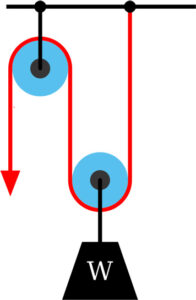
1. Consider the pulley arrangement above. If the weight is 100 pounds, how much force is required to lift it?
a. 20 pounds
b. 33 pounds
c. 50 pounds
d. 75 pounds
2. You are cutting a piece of hoistway cable. You need 3/8 of a metre, but your tape measure is in decimals. What is 3/8 expressed as a decimal?
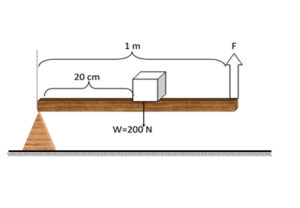
3. The length of the lever is 1 meter. What is the mechanical advantage of the system?
a. 1/5
b. 5
c. 1/2
d. 2
4. An elevator mechanic earns $40 per hour. After a successful union negotiation, they receive a 15% raise. What is their new hourly rate?
Answer Key
1. B
Notice the weight is attached to one end of the rope and to one pulley. The force required to lift a 100 pound weight with this arrangement is 100/3 = 33.
2. expressed as a decimal is 0.375
3. B
The mechanical advantage of a lever (second class in the specific case) is calculated in two ways:
MA = W/F or MA = dF/dW
The second equation is more suitable here, as we have enough information. So,
MA = 1m/20cm = 1m/0.2m = 5
4. To find 15% of 40 – 15/100 X 40 = (15 X 40) / 100
600/100 = 6 Now add to 40 = $46
Time’s Up! How did you do?
- 4/4 Correct: You’re Tier 1 material. You’ve got the speed and the knack.
- 2/4 or 3/4 Correct: You’re in the “Danger Zone.” You know the basics, but the clock is your enemy.
- 0/4 to 1/4 Correct: Stop winging it. You need to master the mechanical “shortcuts” and mental math hacks in our Online Training Vault before recruitment opens.
The “Anatomy of a Wrong Answer”
Sample Question: If Gear A (10 teeth) drives Gear B (20 teeth), and Gear A turns clockwise, what is the speed and direction of Gear B?
The Trap: Many students see “20 teeth” and think “Double the speed.” They choose “Clockwise, 2x speed.”
The Reality: In mechanical systems, a larger driven gear turns slower, and adjacent gears reverse direction.
The Result: You just lost a point on a “simple” question. Our prep teaches you to visualize the physics so you don’t fall for the “Big Prep” traps.
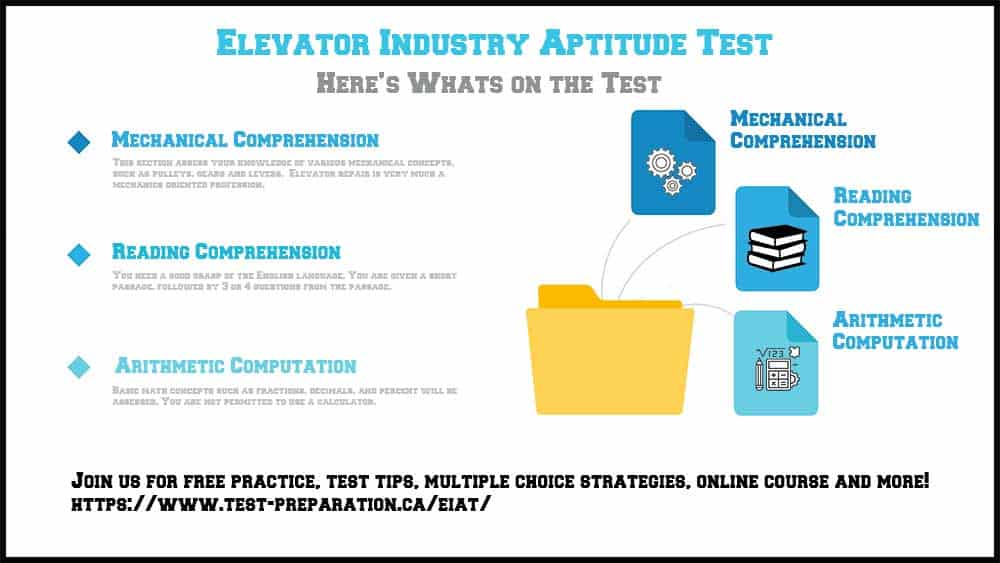
What’s on the EIAT Test
Elevator Industry Test FAQ
Ready to Start Your Career?
Includes the Complete EIAT Study Guide & The Canadian Elevator Career Roadmap
|
Interactive Online Training Vault
Our most popular option. Includes full video lessons, 2-minute drill simulations, and the "Step-by-Step" Provincial Licensing Roadmap. |
Join the Online Course |
|
Success Blueprint (PDF Download) Instant access to the complete study guide and career roadmap. Perfect for offline study at your kitchen table. |
Download PDF Now |
Don't let a two-year wait stand between you and a Tier 1 salary. Let's get to work.
Date Published: Monday, February 10th, 2020
Date Modified: Tuesday, June 16th, 2026
1 Comment
Very helpful thx!